
San Francisco Court Blocks Statewide Blackjack Regulations for Private Cardrooms
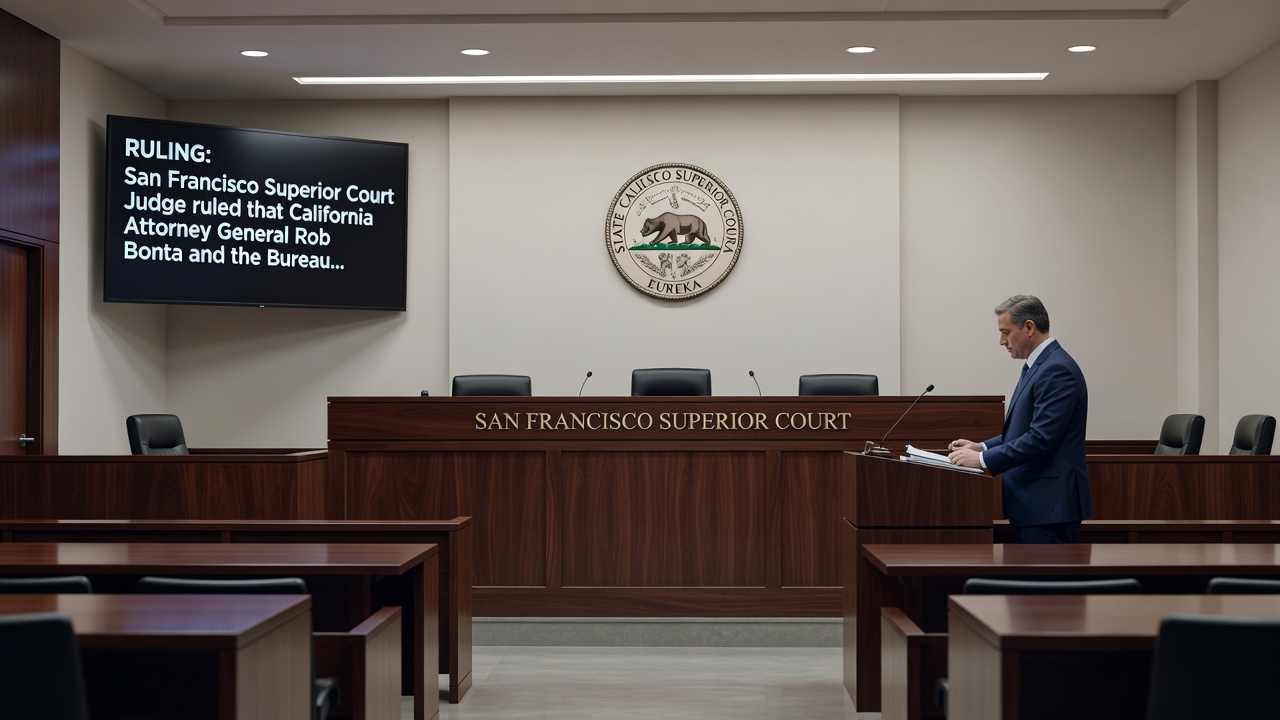
A San Francisco Superior Court judge ruled that California Attorney General Rob Bonta’s Bureau of Gambling Control lacked statutory authority to issue statewide regulations severely restricting or effectively banning blackjack-style games at private cardrooms, and this decision allows dozens of cardrooms to continue offering the games while preserving local tax revenue and jobs amid ongoing disputes with tribal casinos that sought to limit competition.
The ruling follows a preliminary injunction and represents the latest development in a years-long legal battle that has centered on the scope of state regulatory power over cardroom operations across California.
Details of the Court Decision
The judge determined that the Bureau of Gambling Control exceeded its authority when it attempted to enforce new rules under California Code of Regulations, title 11, sections 2073 through 2077, and those provisions would have imposed strict limits on how cardrooms could structure blackjack-style games that rely on a player-dealer format rather than traditional house-banked play.
Cardroom operators argued successfully that such restrictions required explicit legislative approval instead of administrative rulemaking, while the court agreed that the Bureau had overstepped its statutory boundaries in this instance.
Background on the Regulatory Dispute
Private cardrooms in California have operated for decades under local ordinances and state oversight that permits player-banked games, yet tribal casinos have maintained that certain blackjack variations give cardrooms an unfair competitive edge because tribes hold exclusive rights to house-banked table games under tribal-state compacts.
Disputes escalated when the Bureau proposed regulations that cardroom representatives described as a de facto ban on popular game formats, and the legal challenge moved forward after a preliminary injunction temporarily halted enforcement of those rules pending further review.
Impact on Cardrooms and Local Economies
Dozens of cardrooms located throughout the state can now continue offering the contested blackjack-style games without the restrictions that the Bureau sought to impose, and this continuation supports employment for dealers, floor staff, and support personnel while sustaining tax payments that flow to city and county budgets.
Local governments that rely on cardroom revenue have noted the importance of these operations for community services, and the court outcome maintains the status quo that existed before the proposed regulations took effect.
Ongoing Legal Context and Tribal Casino Positions
Tribal casinos have participated actively in the broader dispute because they view expanded cardroom game offerings as direct competition that affects their market share, and they have pursued both regulatory and legislative avenues to restrict such activities over multiple years.
The current ruling addresses only the Bureau’s regulatory approach and does not resolve underlying questions about game classification or compact interpretations that remain subject to further litigation or negotiation between the parties involved.
According to Court rulings on Bureau of Gambling Control regulations (Cal. Code Regs., tit. 11, §§ 2073-2077), related filings detail the procedural history that led to the Superior Court decision, while additional coverage appears at courthousenews.com.
Future Proceedings
Parties on both sides of the dispute continue to evaluate next steps, which may include appeals or renewed efforts to seek legislative clarification on the authority of the Bureau of Gambling Control, and observers note that the case remains part of a longer pattern of litigation that has spanned several years without a final statewide resolution.
As proceedings extend into August 2026, cardroom operators and tribal representatives alike are monitoring developments that could influence how similar games are regulated or litigated in other jurisdictions.
Conclusion
The San Francisco Superior Court decision reinforces limits on administrative rulemaking in the area of cardroom gaming and permits existing operations to continue under prior guidelines, and the outcome leaves open avenues for further legal or legislative action while cardrooms maintain their current game offerings and associated economic contributions across California communities.